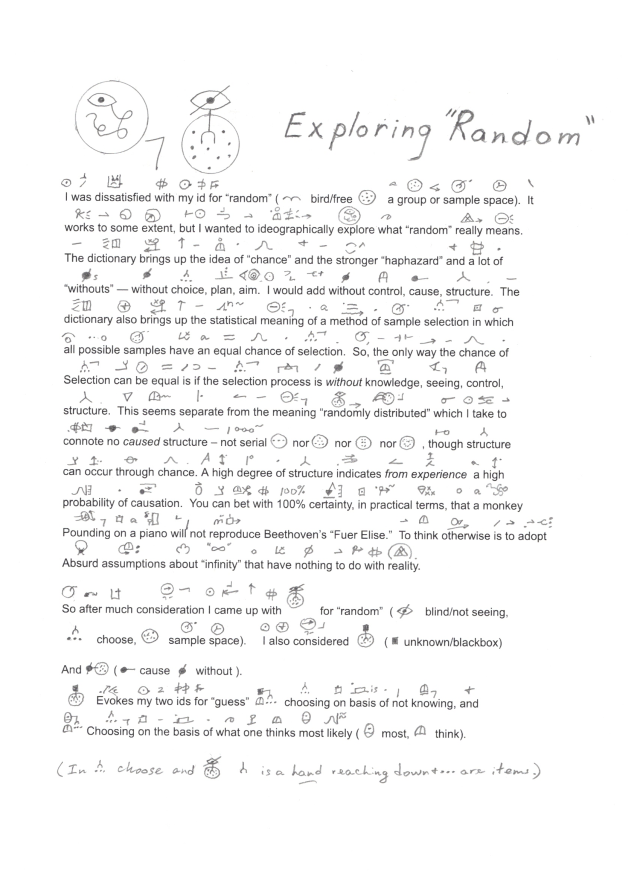
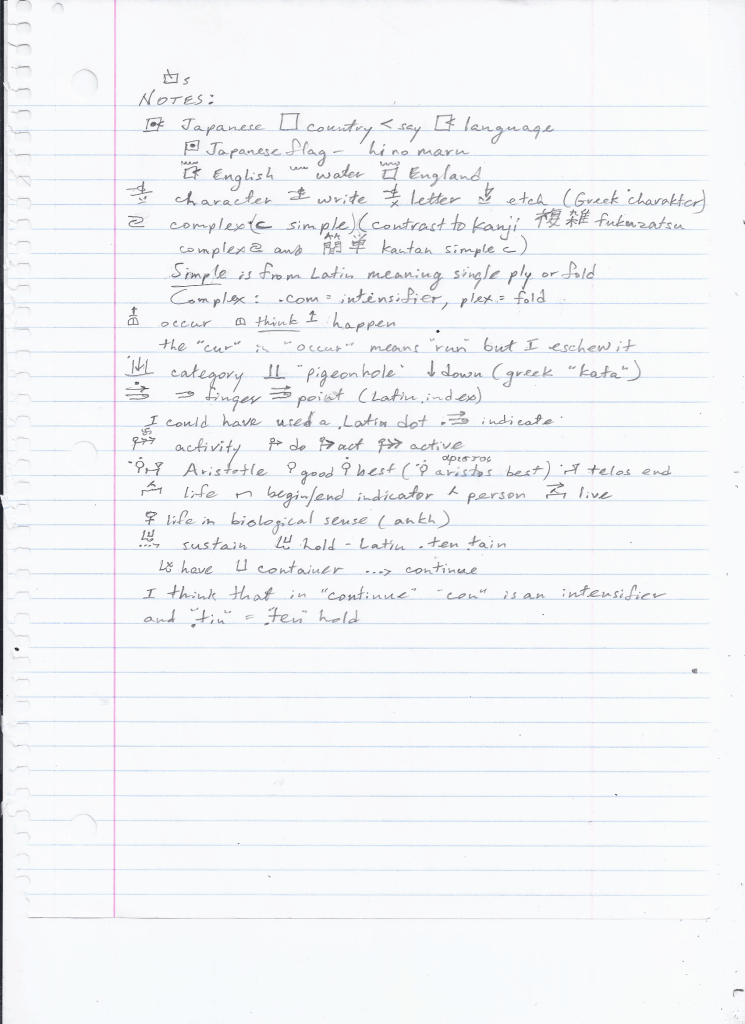
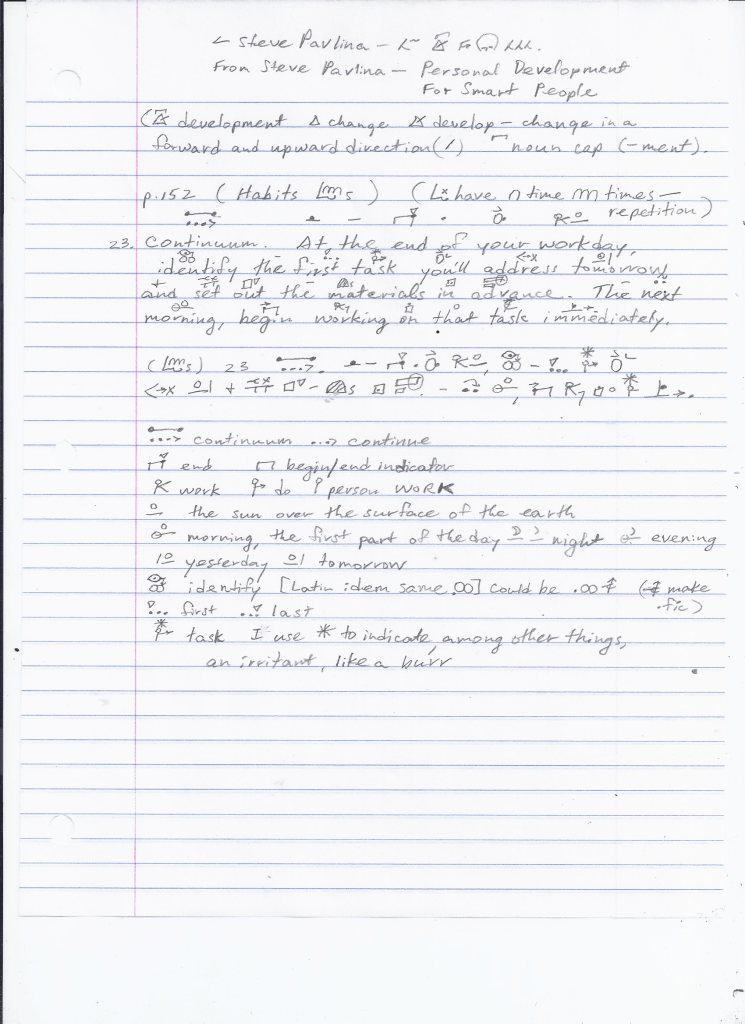
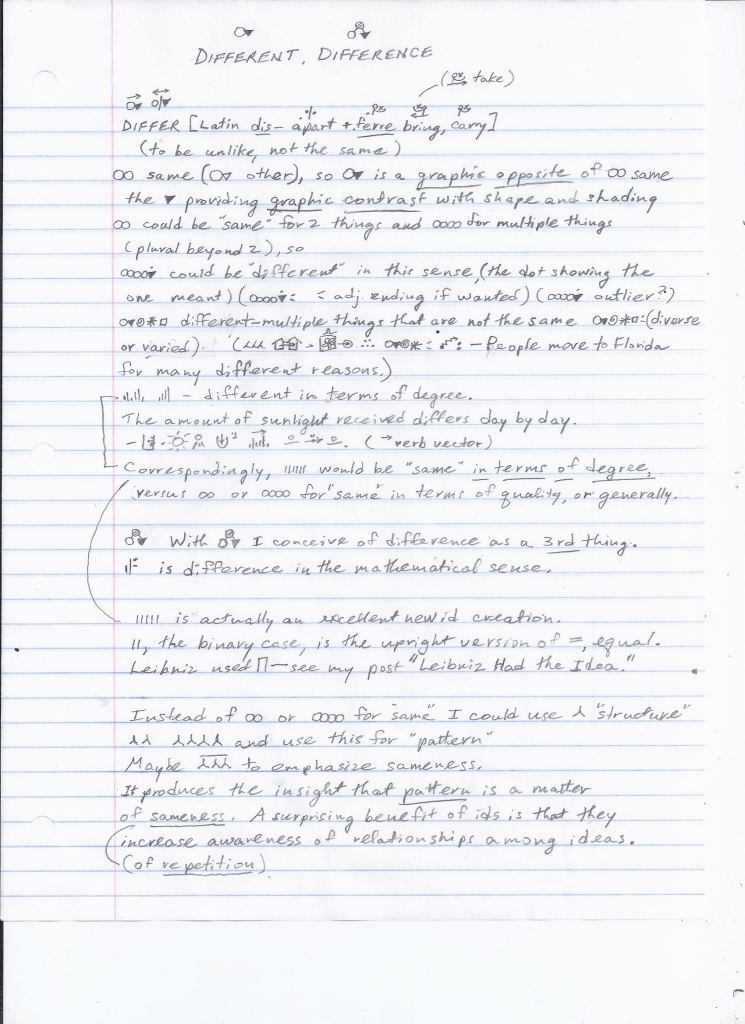
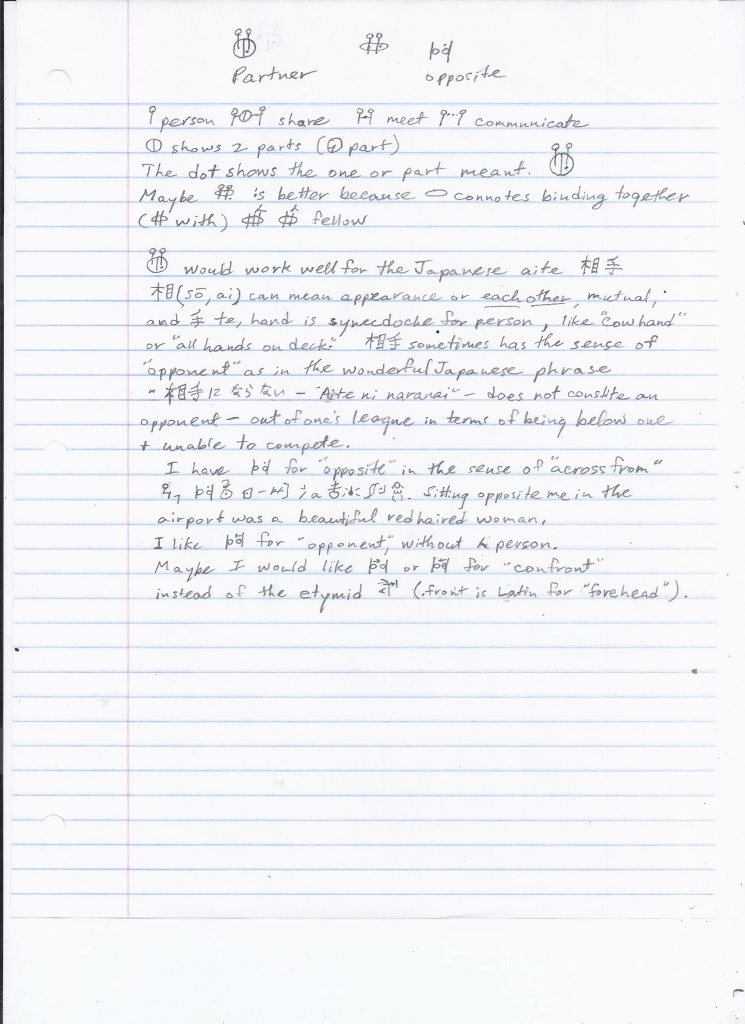
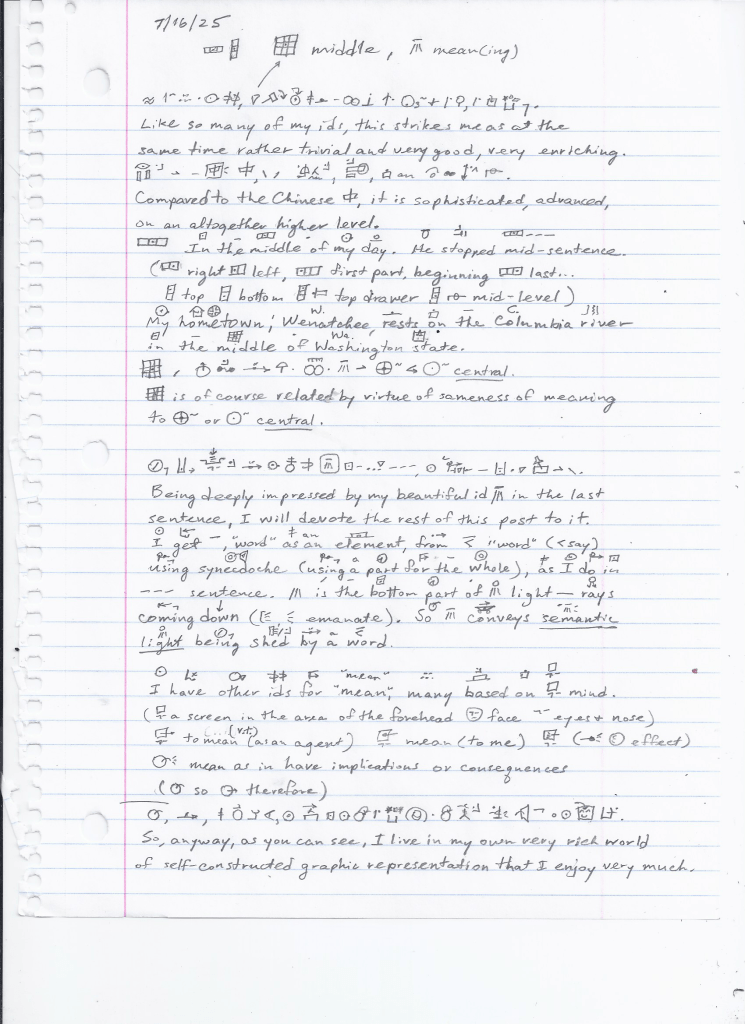
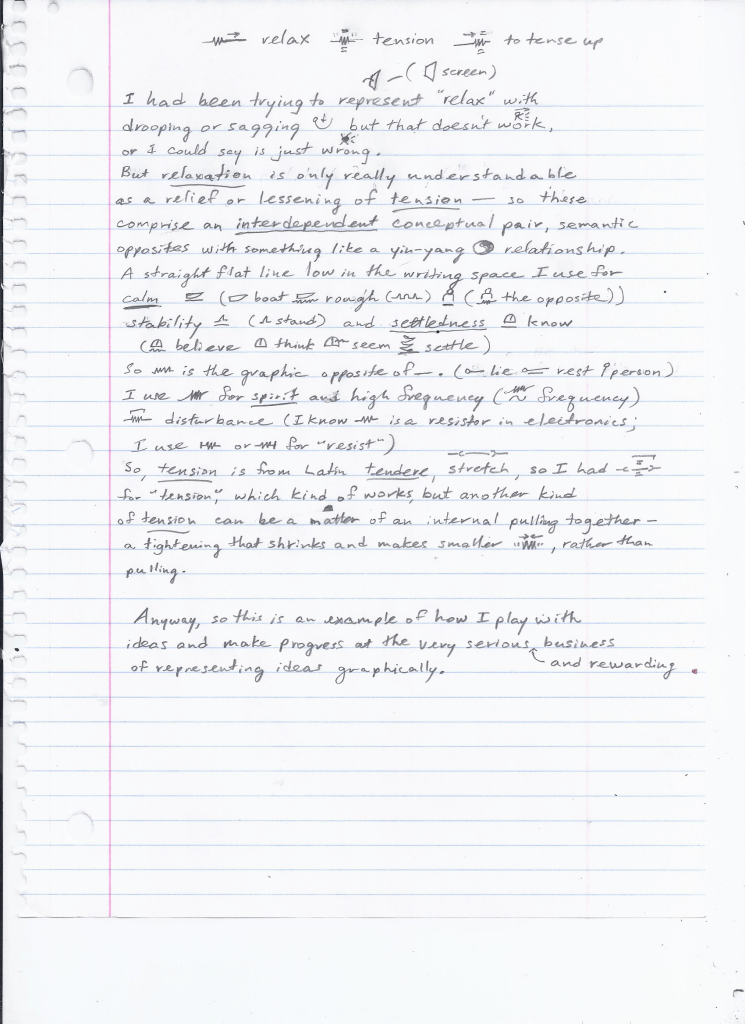
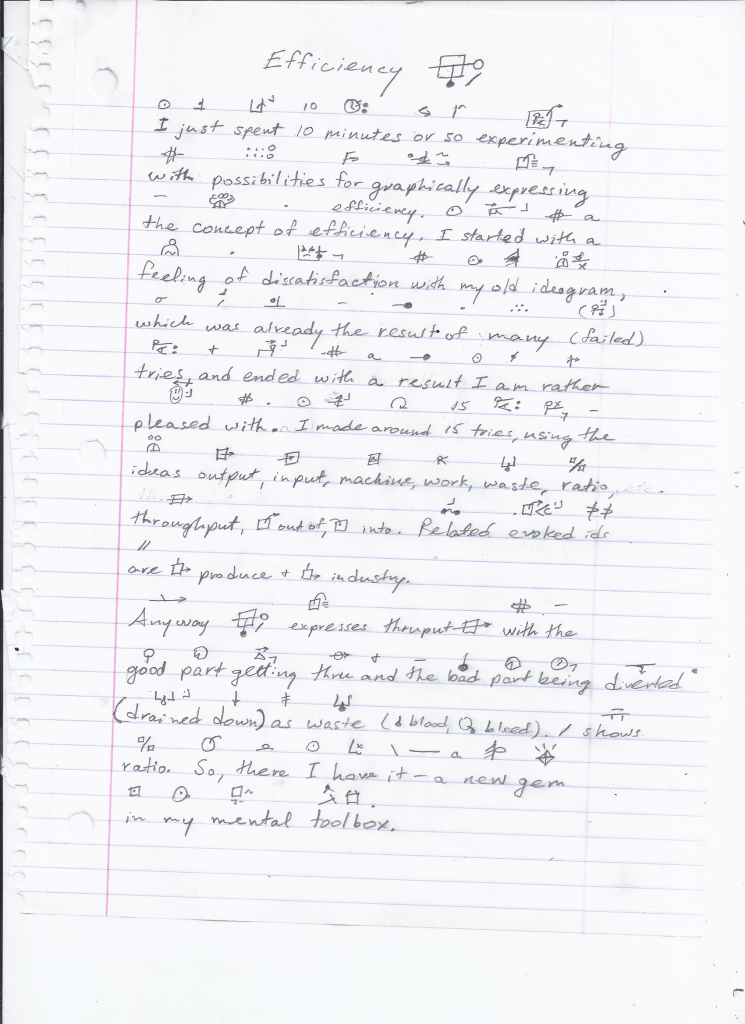
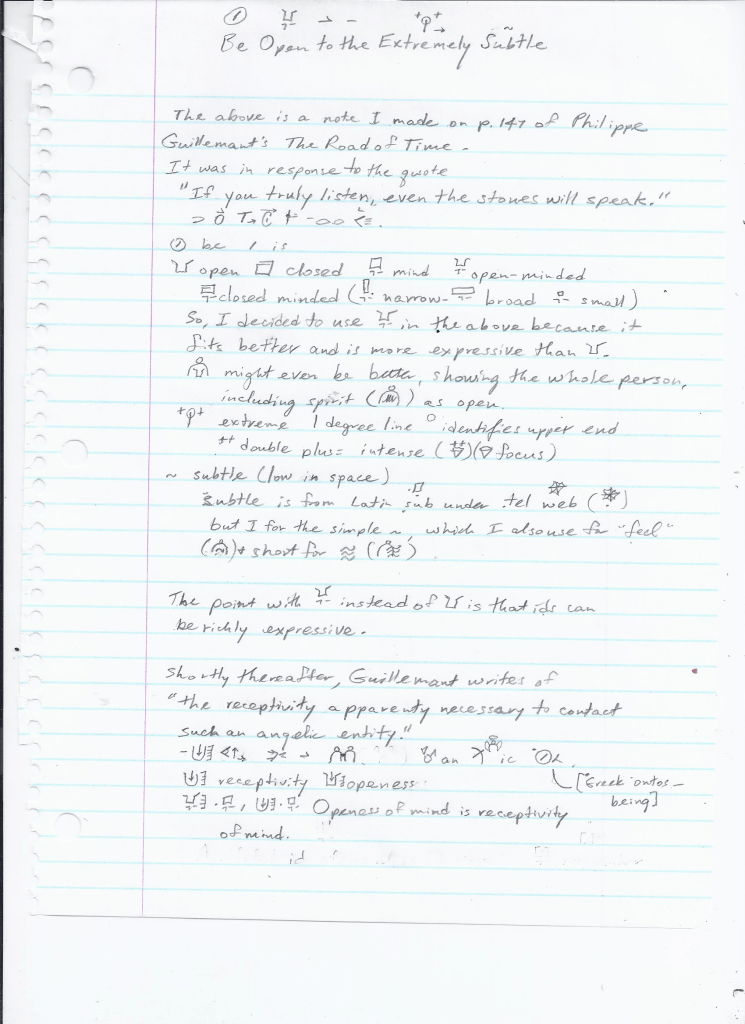
The medium is the message. The point here is, of course and as always, the ideograms.

The medium is the message. The point here is, of course and as always, the ideograms.

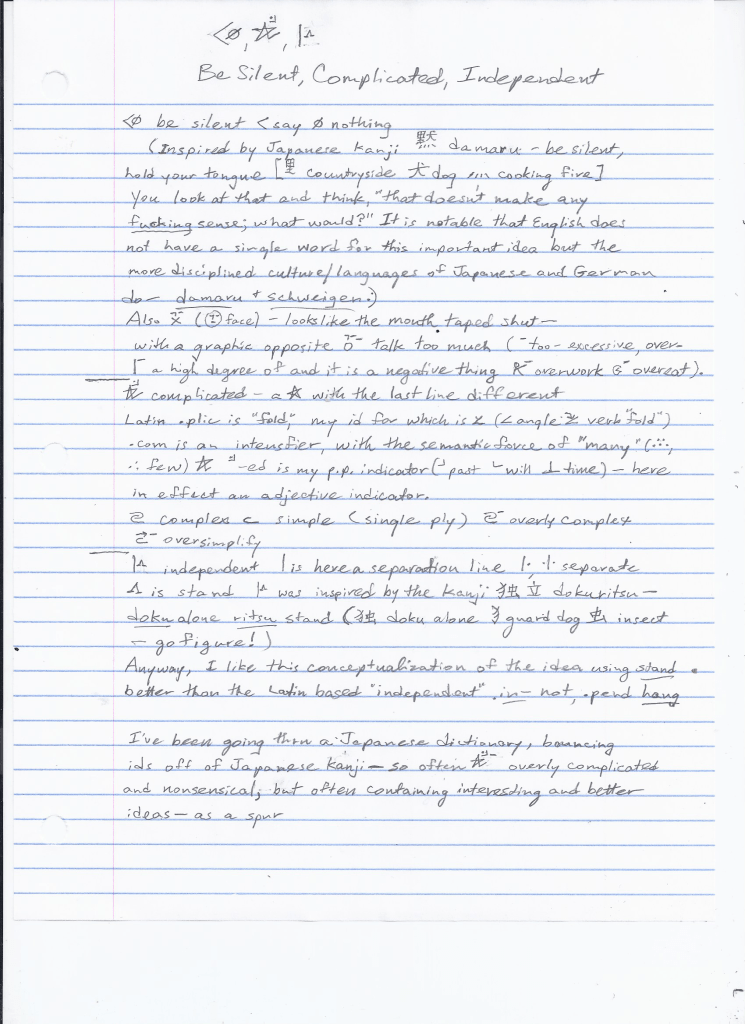
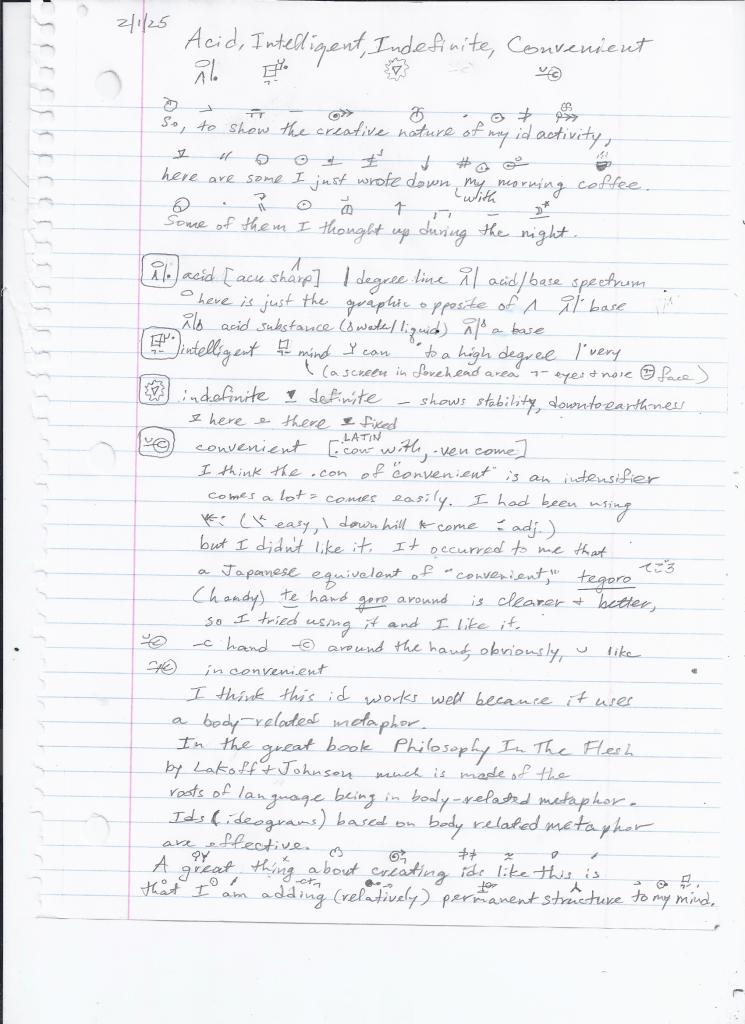
Ids like this occur to me spontaneously as I read or listen.

I have over 500 posts on my neoideogram site, many of which include substantial explanations. This post https://neoideograms.com/2016/12/04/leibniz-had-the-idea/ gets at something fundamental.
Here’s a little more addressed to you


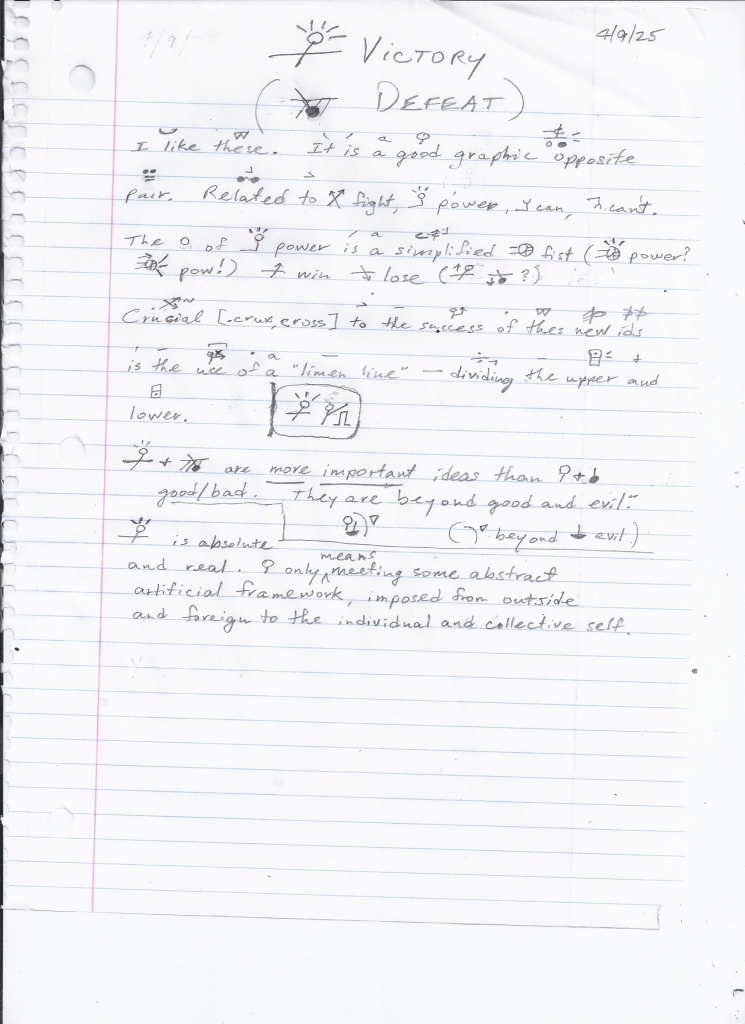
Ids are not just a different way of writing. They are a way of representing thoughts. For me they entail a stronger visual imagery aspect to thought. See below where “it has good aspects and bad aspects” is conveyed in one image. This is what (automatically) occurred to me along with the verbal thought. It is a paraideographic image, a diagram using ids as constituents. Notice I dispense with “it has” and “aspects” (points) — they are implicit. The idea shown in the 2nd item is: “it doesn’t matter” is semantically equal to “it is (all) the same.” And the last one, in which I visually conceptualize the idea that “no” and “yes” are tools of control works for me — it is useful.

It makes little difference to me if anyone looks at this post or not. For me it is productive mental exercise. The great thing is that images produced will to some degree stick in my mind and strengthen it. Such images are the nuts and bolts of the mechanics of mind — the real stuff of thinking and understanding.

The article on DMSO I refer to is at https://www.midwesterndoctor.com/p/dmso-could-save-millions-from-brain

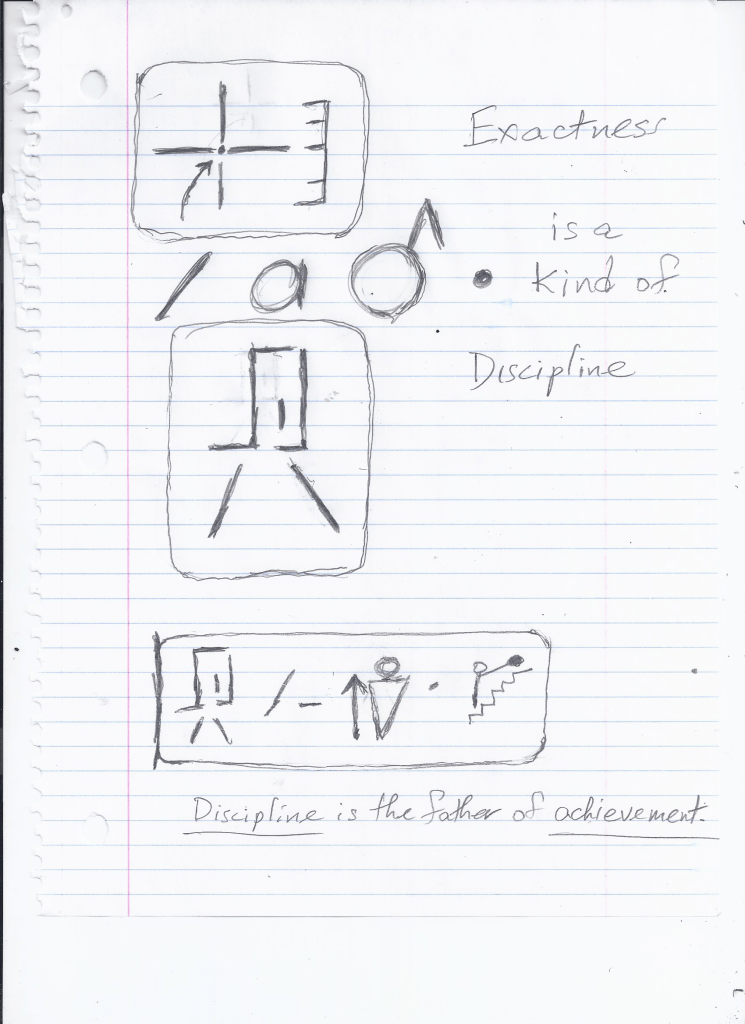
Another taste of what I am doing.


In reaction to a passage in the book Superforecasting by Philip Tetlock I created good more precise ids for “possible, certain, impossible.”

