
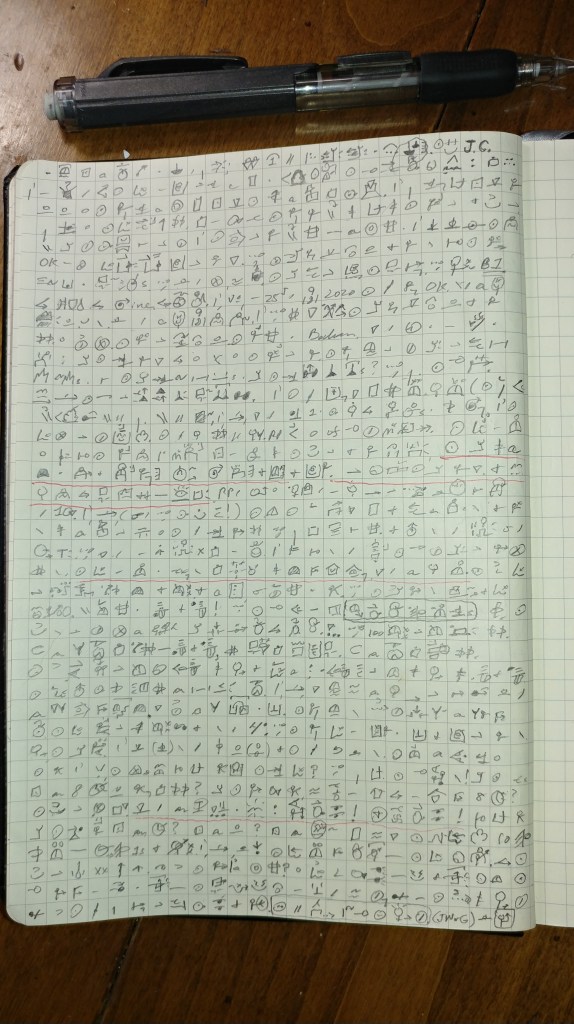
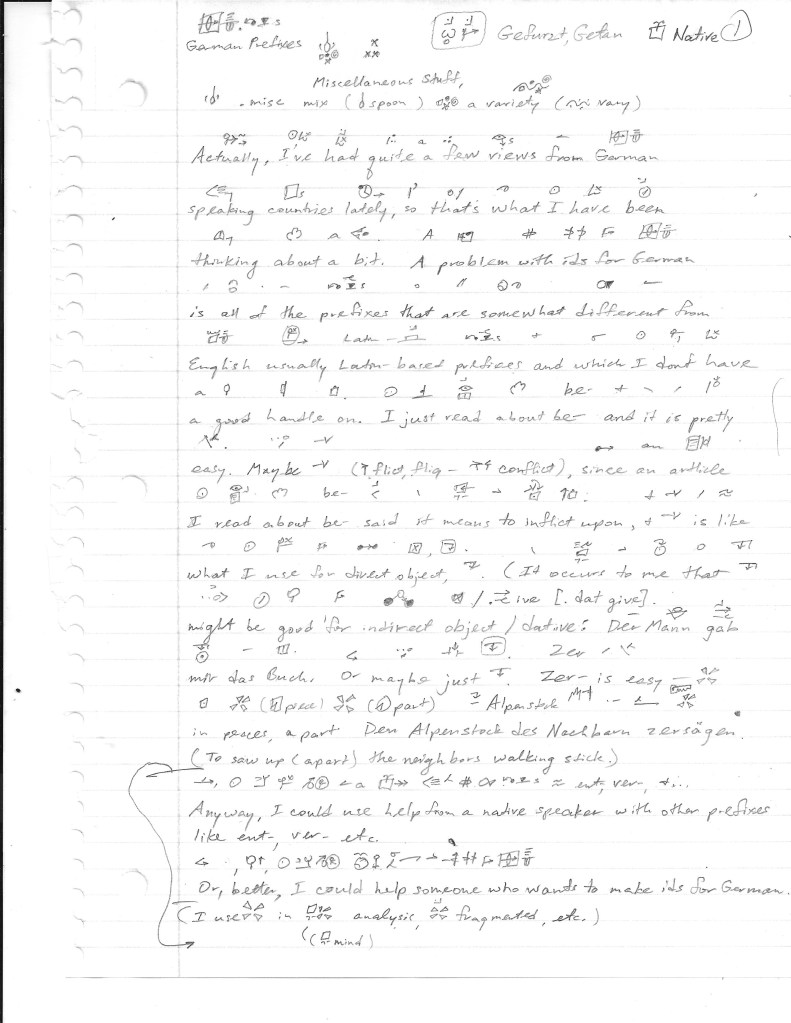
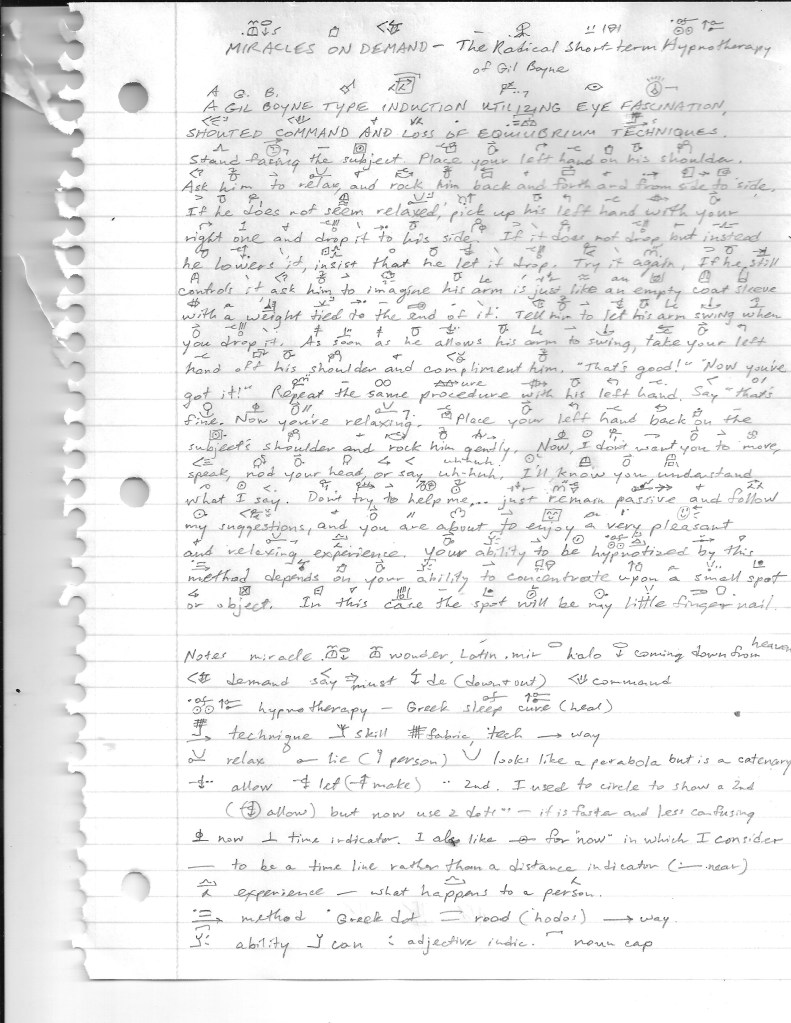
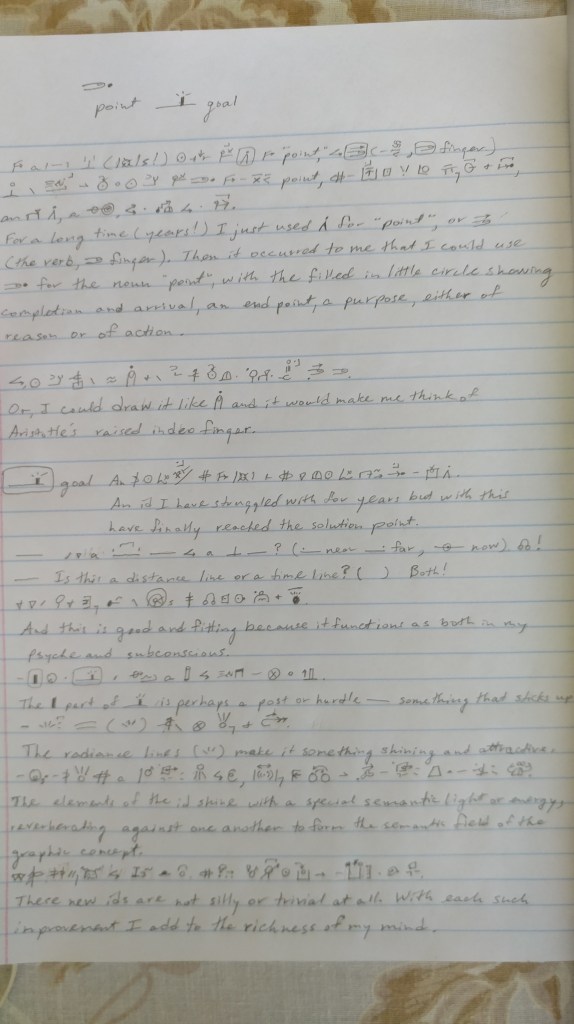
As always, the medium is the message. I made a number of good id improvements while doing this transcription.


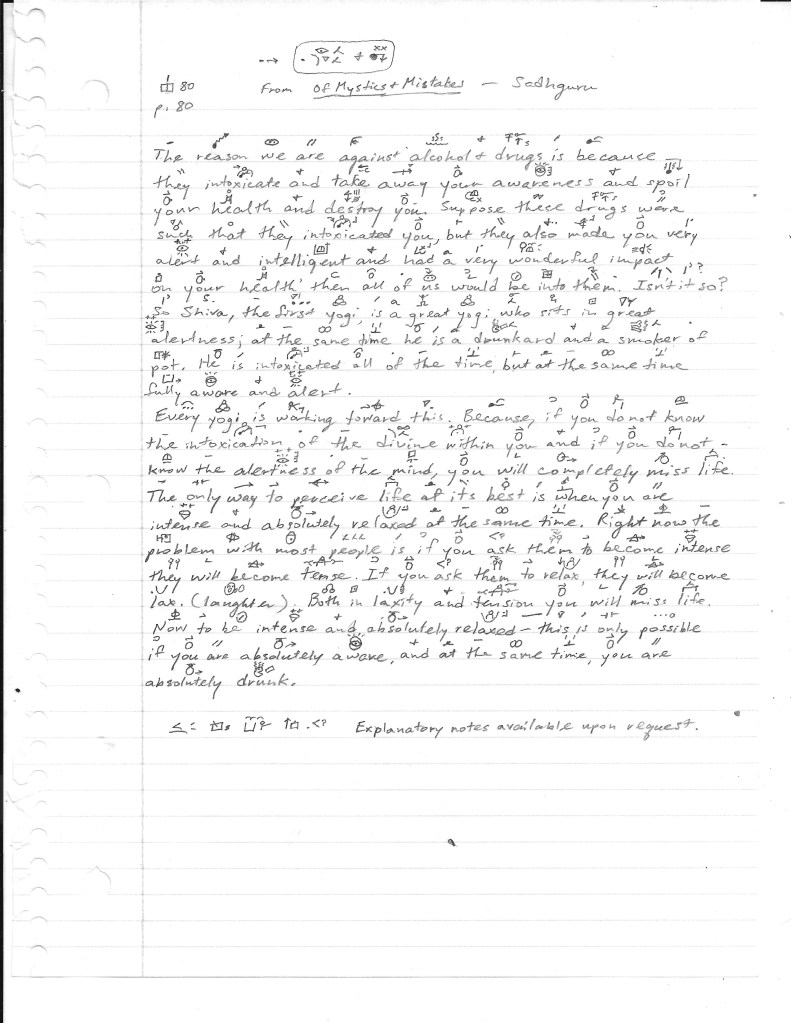
As always, the medium is the message. I made a number of good id improvements while doing this transcription.
On a page like this I might typically make 10 or so id improvements or completely new ids. I also make them throughout the day and while lying in bed, as ids are a permanent part of my psyche. These are permanent additions to my mind. It’s a wonderful hobby.
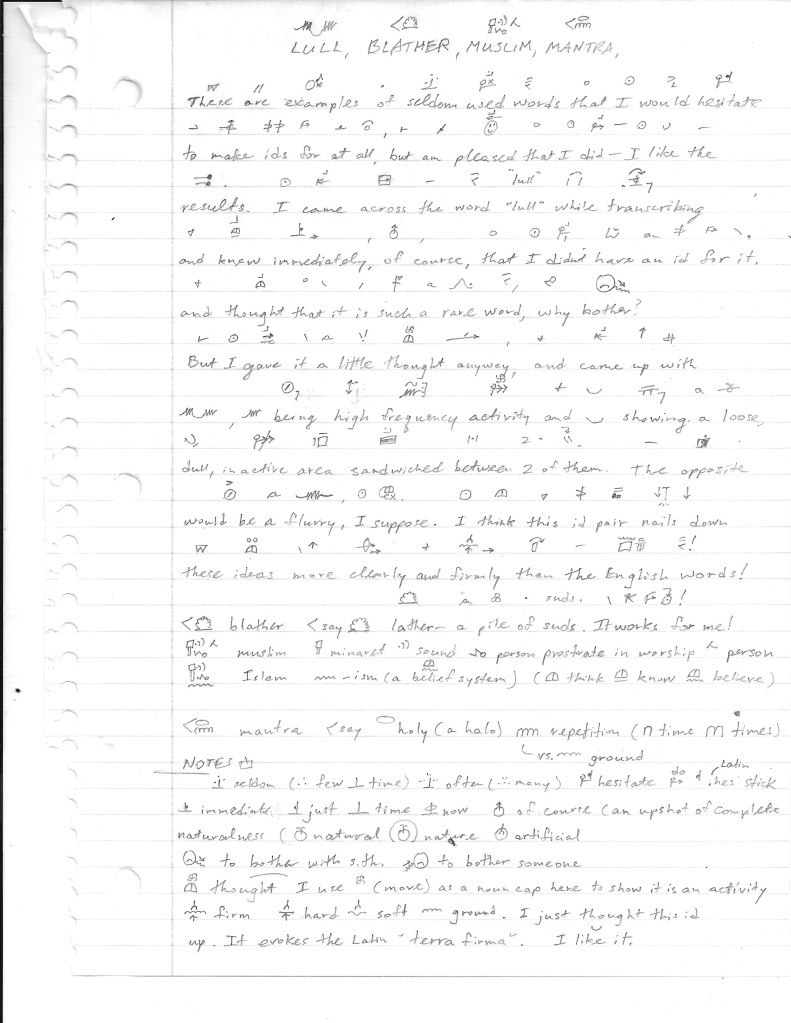
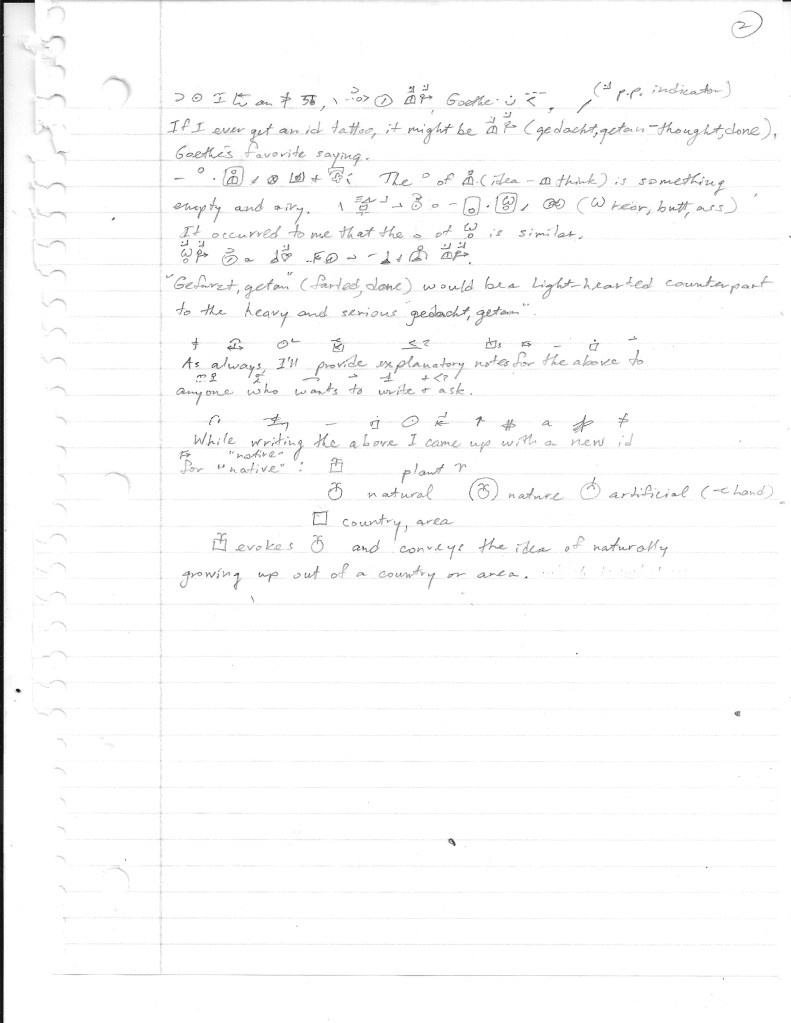
One point I try to make with this post is that I often go ahead and reluctantly make ids for seldom used words but come to like them.
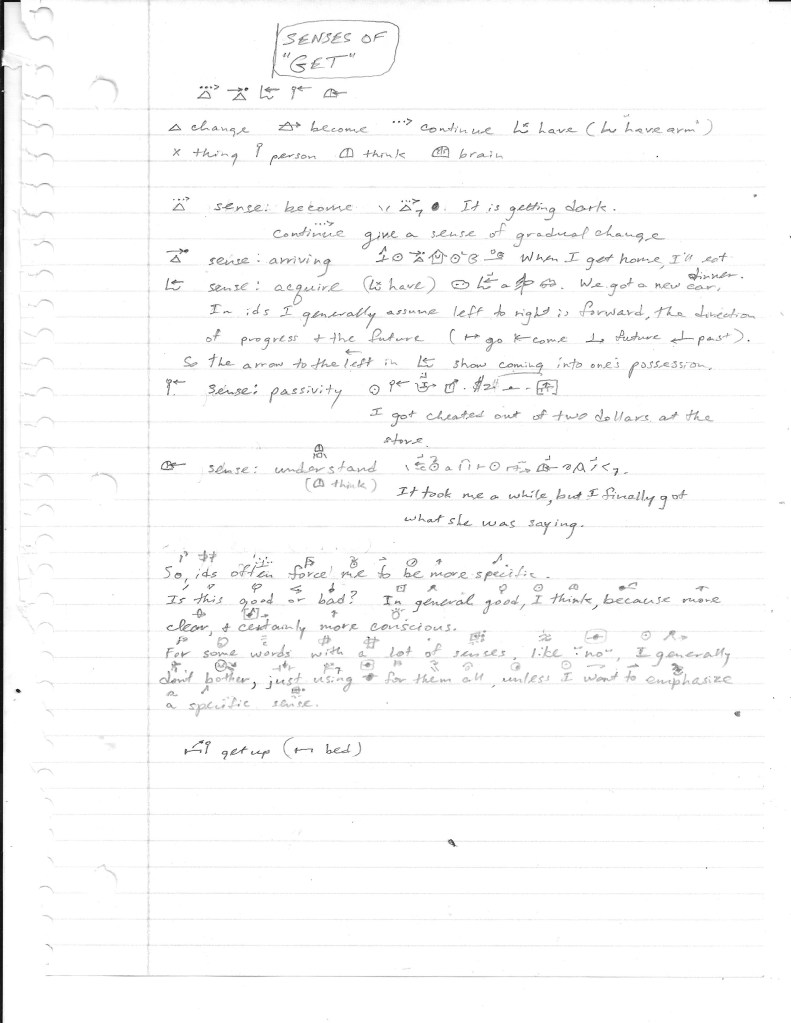
Another is that, as in the case of the id pair lull/flurry, having ids for the terms nails them down in my mind and makes them not only clearer, but more richly embedded.
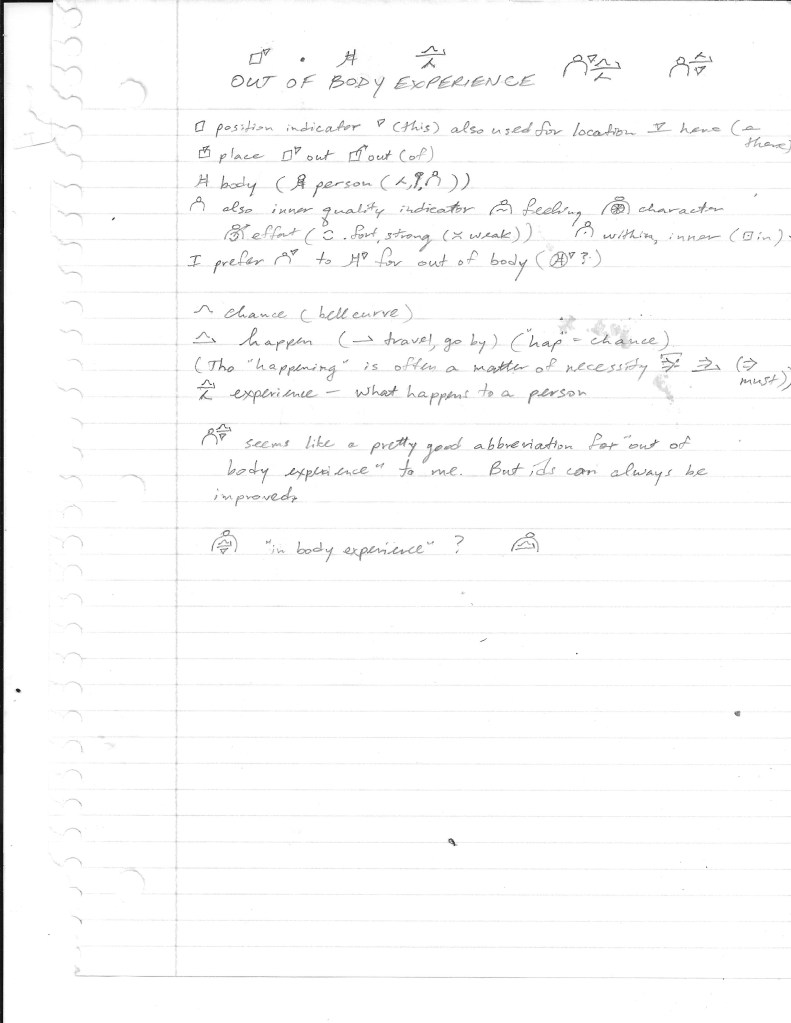
someone asked me for ids for “out of body experience” and “in body experience”. I don’t know what is meant by latter though.
I am not qualified to make accurate ids for Japanese characters–they’re too nuanced and complex for a non-native speaker. But I did get something out of this exercise, most prominently a good way to represent passive voice.
The general problems are interesting tho. For a single Japanese compound, like “seikatsu” (economy) I could make simpler replacements for the individual kanji or replace the compound with a single simple id. I did go through a book of kanji and make id replacements. I found it often difficult, mainly since a single kanji can have many disparate, diverse meanings. The same thing occurs in English though, with words like, for instance, “figure” and “get” with all of their meanings.
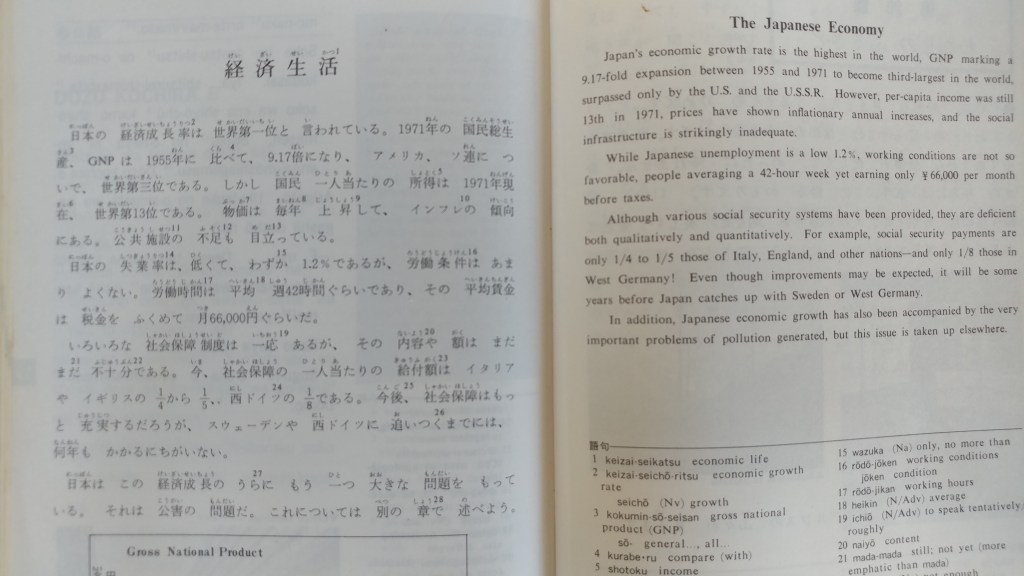
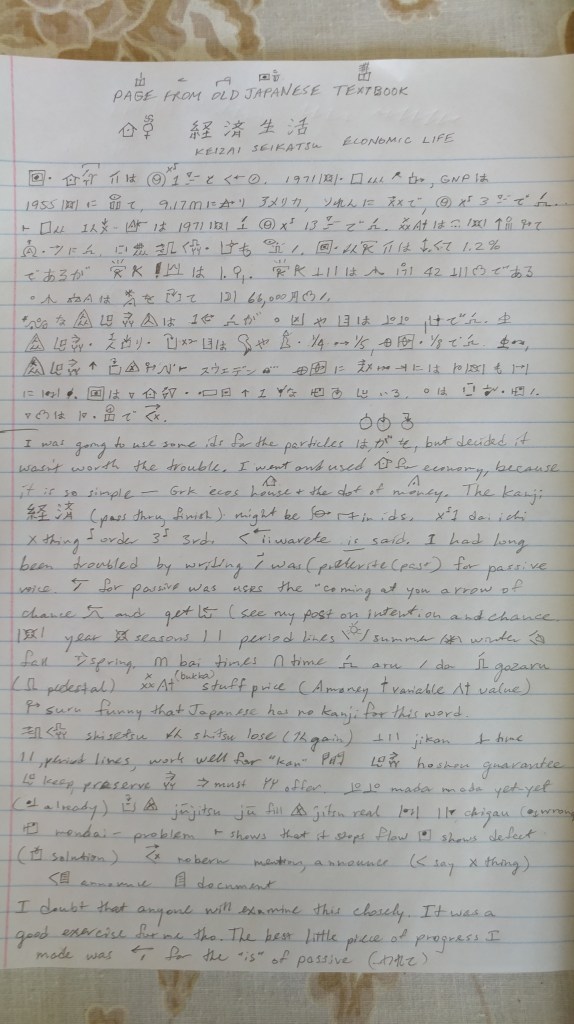
A page from the book. Note how compact the ids are.
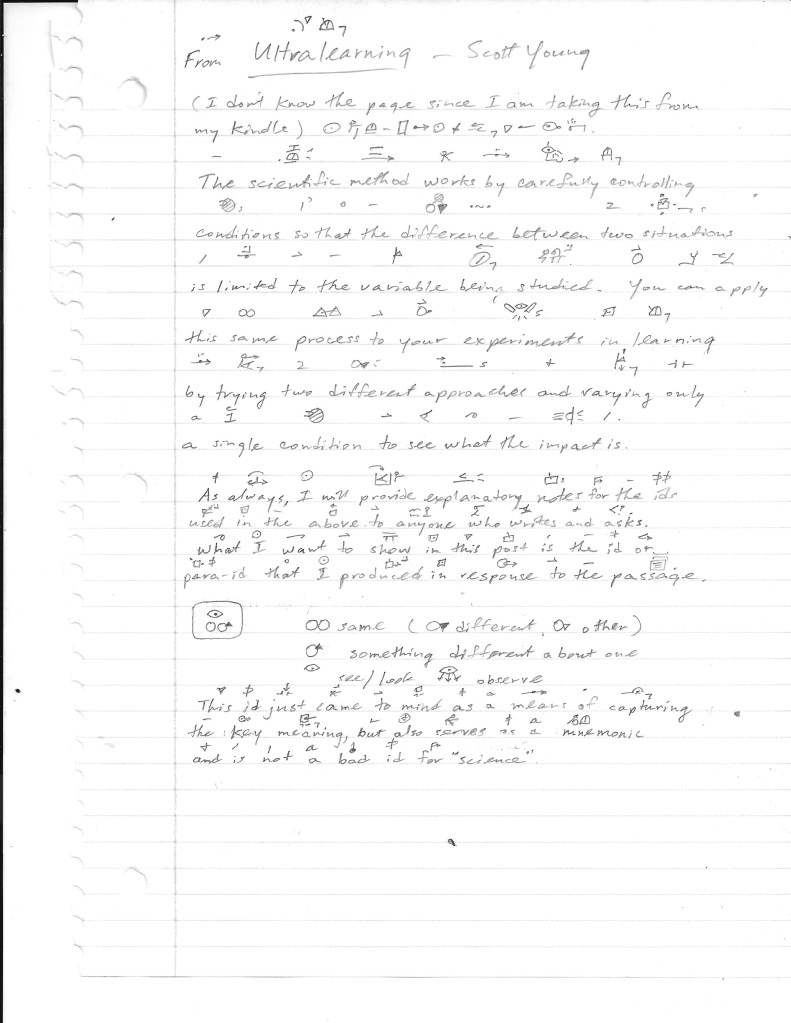
I generously offer, if anyone is interested, to provide explanatory notes for this transcription. Just send me an email at the contact address on this site.

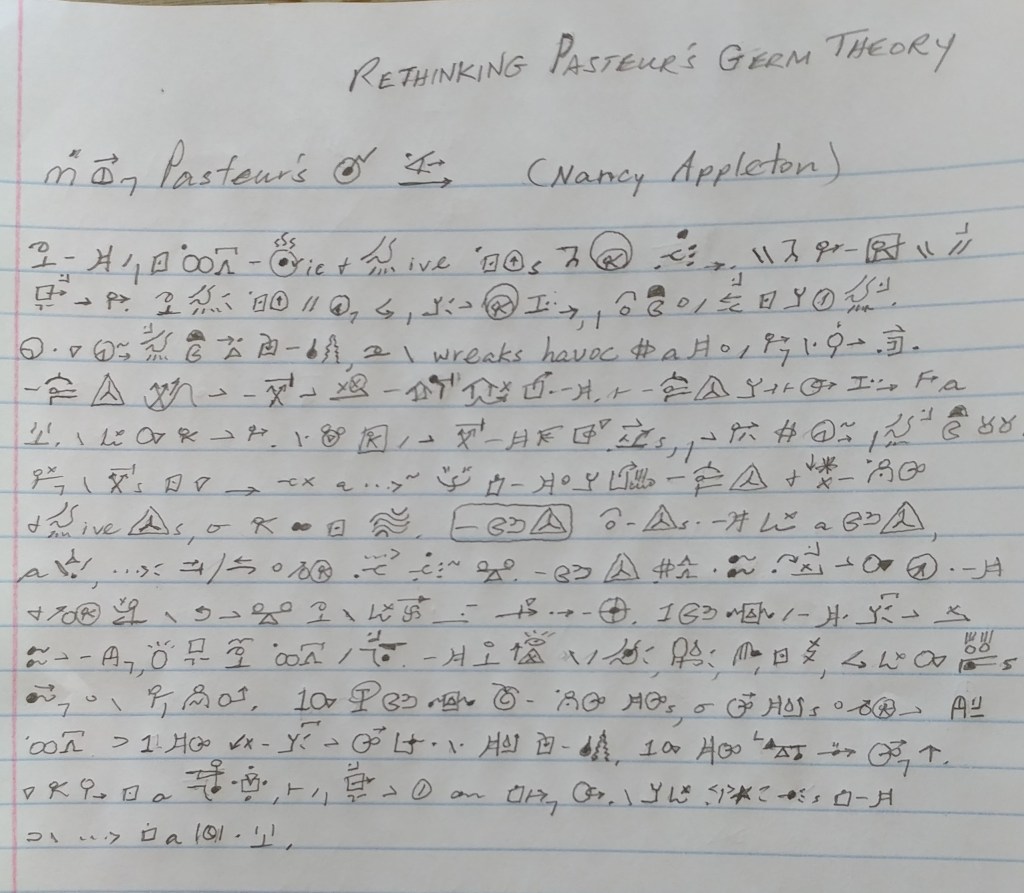
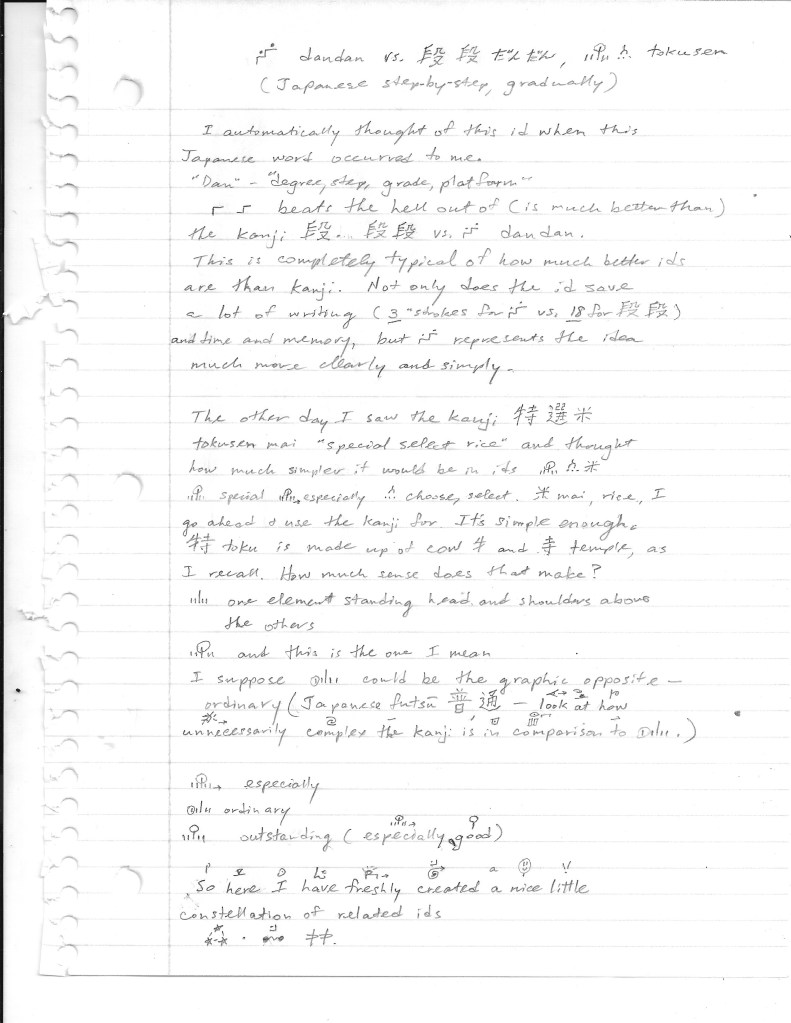
Illustrating, again, the superiority of ids over Chinese characters:

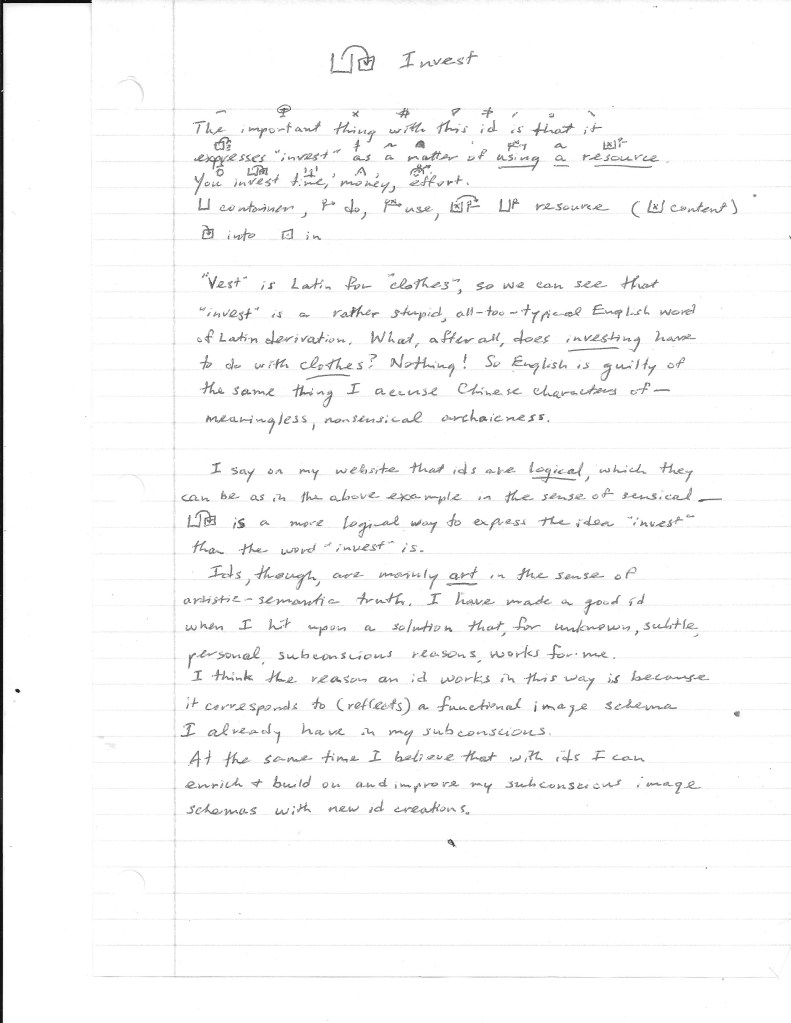
I have made many new ideograms with the “resource” idea.
 | ErnieM on gewoehnlich, offensichtlich, W… |
 | Gerard Walker on gewoehnlich, offensichtlich, W… |
| ErnieM on Think-sudden-connect. Everythi… |
| ErnieM on Think-sudden-connect. Everythi… |
 | Livy on Think-sudden-connect. Everythi… |
Ideograms for English. Creatively making English graphic.








 Neo Ideograms